Rain can be beneficial for your lawn, trees, and plants, but excess water can quickly become a problem when it does not have a clear path to move away from your property. Water that repeatedly collects in the same areas can affect soil, grass, planting beds, patios, walkways, driveways, and other outdoor features.
For homeowners and businesses in Greensboro, NC, drainage should be considered before starting many types of outdoor improvement projects. A new landscape, concrete patio, driveway, or hardscape may look great when completed, but the long-term performance of the project also depends on how well the surrounding property handles rainwater.
Understanding the relationship between grading, drainage, landscaping, concrete, and hardscaping can help property owners plan outdoor improvements more effectively.
At Greensboro Grading and Concrete, we provide grading, landscaping, concrete, hardscaping, excavation, and drainage-related services for residential and commercial properties. Our goal is to help property owners create outdoor spaces that are practical, attractive, and properly prepared for their intended use.
What Happens When Rainwater Does Not Drain Properly?
Every property has natural elevations and slopes that influence how rainwater moves. When those slopes do not direct water where it needs to go, water may collect in low areas or move toward structures and outdoor surfaces.
Depending on the property, poor drainage can contribute to:
- Persistent puddles after rain
- Muddy sections of the lawn
- Washed-out soil
- Exposed roots
- Damaged planting areas
- Water around patios and walkways
- Erosion near slopes
- Saturated soil
- Problems around outdoor structures
- Difficulty maintaining usable lawn areas
Not every wet area requires the same solution. Some properties may benefit from grading, while others may require additional drainage planning or site preparation.
The first step is understanding why water is accumulating and where it should be directed.
Our land grading services can help address uneven terrain, slope problems, yard leveling, erosion concerns, excavation, site preparation, and drainage-related conditions.
Why Grading Is an Important Part of Water Management
Grading determines the shape and elevation of the ground. It is often one of the first considerations when preparing a property for a new outdoor project.
The purpose of grading is not necessarily to make every part of a property completely flat. In fact, appropriate slopes are often necessary to help surface water move away from certain areas.
Imagine a backyard with a noticeable depression where rainwater repeatedly collects. Installing new grass over that area may improve its appearance temporarily, but the underlying low point remains. During future rainfall, water can continue returning to the same location.
Correcting the terrain can address the underlying condition before additional landscaping or construction is completed.
Our grading and site preparation services can be used when preparing areas for lawns, patios, driveways, retaining walls, landscaping, and other outdoor improvements.
Proper preparation can make a significant difference when the goal is to build a functional outdoor space rather than simply cover an existing problem.
Drainage and Landscaping Should Be Planned Together
Landscaping changes the way a property looks, but it can also change how water interacts with the ground.
Planting beds, sod, mulch, decorative stone, trees, shrubs, and other landscape elements all need suitable site conditions. If an area stays excessively wet, certain plants may struggle. If rainwater flows too aggressively across a planting bed, soil and mulch can be displaced.
A landscaping project should therefore consider more than plant selection and appearance.
Our landscaping services include landscape installation, sod installation, lawn renovation, planting, mulch and decorative stone, landscape lighting, drainage solutions, yard grading, and seasonal maintenance.
For example, if a homeowner wants to replace an existing lawn, the project may first require correction of low spots or uneven areas. Similarly, a new planting bed may need appropriate water management before plants are installed.
Planning these elements together can help reduce the possibility of having to disturb a newly completed landscape later.
How Poor Drainage Can Affect Concrete Projects
Concrete is durable, but the conditions surrounding a concrete installation matter.
Driveways, patios, sidewalks, walkways, slabs, and other concrete surfaces require proper site preparation. If the ground around a proposed installation has drainage or grading concerns, those conditions should be considered before construction begins.
Water can also influence the soil surrounding outdoor concrete. Repeatedly saturated or unstable areas may create site conditions that need to be addressed as part of the overall project preparation.
Greensboro Grading and Concrete provides concrete services for residential and commercial properties, including:
- Concrete driveways
- Patios
- Sidewalks and walkways
- Concrete slabs
- Stamped concrete
- Foundations
- Curbs and gutters
- Concrete repairs and replacements
Before beginning a concrete project, evaluating the surrounding terrain can help determine whether grading, excavation, or other preparation should be completed first.
The finished concrete is only one part of the project. The ground underneath and around it also deserves attention.
Protecting Patios and Outdoor Living Areas
Outdoor living spaces are popular additions to Greensboro properties. A patio can provide space for dining, entertaining, relaxing, or enjoying time outdoors.
However, patio placement should take existing water movement into account.
A patio installed in a natural low area may require additional planning to prevent water from repeatedly collecting around it. Likewise, the surrounding landscape should be designed so that runoff does not create unnecessary erosion or muddy areas.
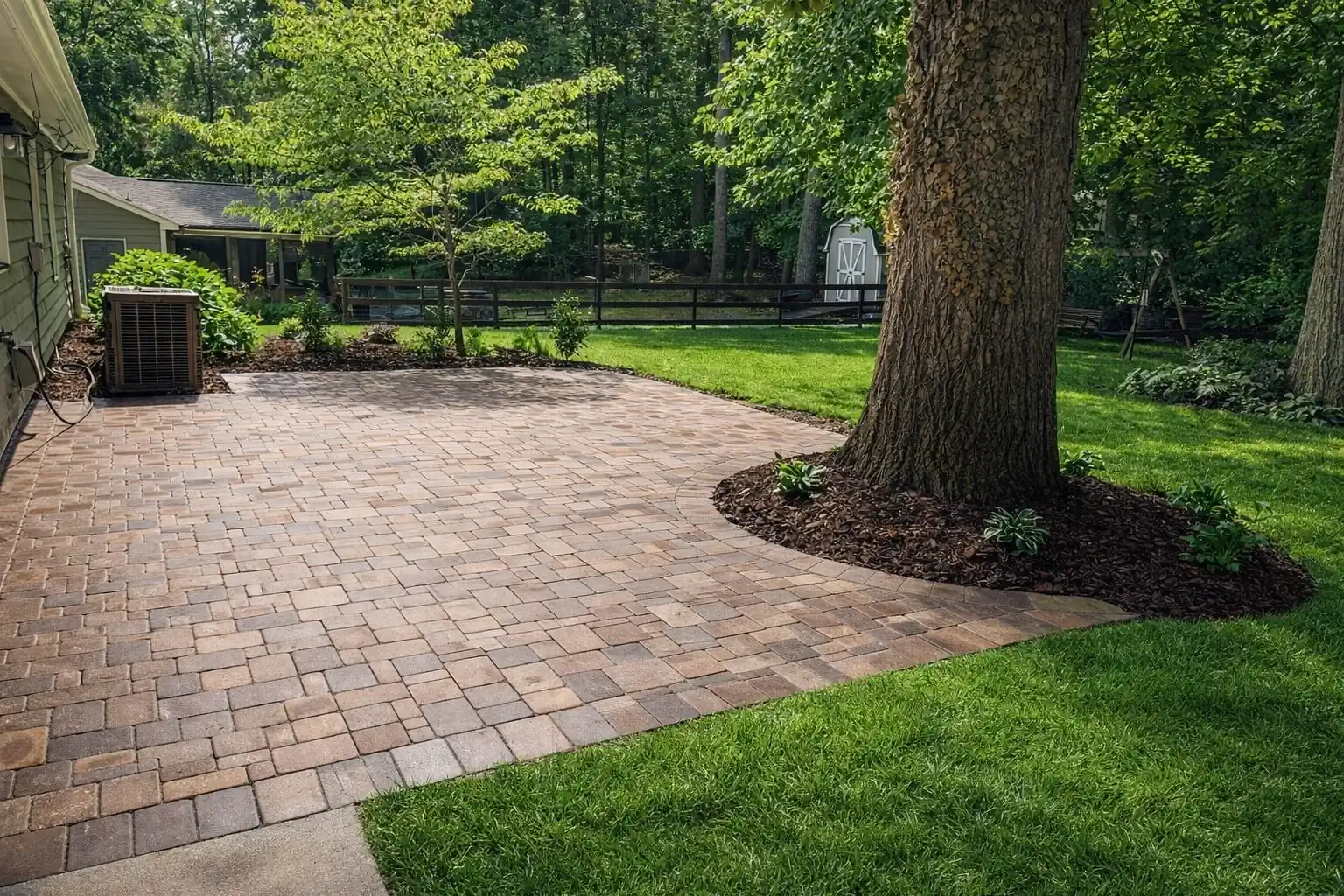
Our hardscaping services include patios and outdoor living areas, retaining walls, walkways, pavers, outdoor fire pits, decorative stone, stairs, entryways, and concrete and masonry work.
When these features are planned alongside grading and drainage conditions, the result can be a more functional outdoor environment.
Drainage Considerations for Retaining Walls and Hardscaping
Hardscape structures can change the way water moves across a property.
Retaining walls are a good example. A wall may be needed to manage a slope, create usable space, or improve the appearance of a landscape. But the design and preparation of the area behind and around the wall should account for site-specific water conditions.
Walkways, stairs, paver areas, fire pits, decorative stone, and other hardscape features also need to work with the surrounding landscape.
This does not mean every hardscaping project requires the same drainage solution. Each property has different elevations, soil conditions, slopes, and existing features.
That is why evaluating the site before construction can help identify potential issues before they become part of the finished project.
6 Warning Signs of Poor Property Drainage
You do not always need to wait for a major problem before looking at drainage conditions. Your property may already be showing signs that water is not moving efficiently.
1. Water Remains After Rain
A puddle that disappears quickly may not be concerning. However, if the same areas remain wet long after rainfall, there may be an issue with grading, soil conditions, or drainage.
2. Soil Is Washing Away
Small channels, exposed roots, displaced mulch, or bare patches can indicate that runoff is moving across the property with enough force to carry soil away.
3. Certain Areas Stay Muddy
If one section of the lawn consistently becomes soft and muddy, especially after ordinary rainfall, it may be worth investigating why water is concentrating there.
4. Water Flows Toward Outdoor Features
Observe where water travels during rainfall. If runoff repeatedly moves toward a patio, walkway, driveway, or other feature, the property’s grading may need attention.
5. Low Spots Keep Reappearing
Low areas can become obvious over time as water repeatedly settles in the same location. These areas can make lawn care and landscaping more difficult.
6. Your Yard Is Difficult to Use After Rain
A yard that becomes excessively wet every time it rains may limit outdoor activities and make routine maintenance more difficult.
Recognizing these signs early gives property owners an opportunity to investigate the cause before planning additional improvements.
Should Drainage Be Addressed Before a New Outdoor Project?
In many situations, evaluating drainage before construction or landscaping can make the project easier to plan.
Consider checking the property’s drainage conditions before installing:
- A new driveway
- Concrete patio
- New lawn or sod
- Retaining wall
- Paver walkway
- Outdoor living area
- Decorative stone
- Large planting beds
- New grading or landscape features
If the terrain already has low areas, steep slopes, erosion, or recurring standing water, those conditions may influence how the project should be designed.
Starting with site preparation can also help avoid completing one part of a project and then discovering that additional grading or drainage work is needed afterward.
How Grading Can Prepare Your Property for Landscaping
A landscape renovation often involves several stages.
First, the existing property may need to be cleared, reshaped, or leveled. Next, the soil and terrain can be prepared for the planned landscape features. After that, sod, plants, mulch, decorative stone, or other materials can be installed.
If grading is necessary, completing it before the final landscaping can make the installation process more organized.
For example, a homeowner planning a new backyard could combine grading with a lawn renovation and patio installation. This allows the property’s terrain and planned outdoor features to be considered together instead of treating each improvement independently.
Greensboro Properties Have Different Drainage Needs
There is no single drainage approach that works for every property.
A small residential yard may have completely different requirements from a large commercial property. One site may have a relatively simple low spot, while another may have significant slopes, existing concrete, landscaping, structures, or runoff concerns.
Property owners should therefore avoid assuming that a solution used on one property will automatically be appropriate for another.
An evaluation of the existing site can help determine what type of preparation or improvement may be suitable.
Greensboro Grading and Concrete works with homeowners, businesses, and property managers on outdoor improvement projects throughout Greensboro, NC and surrounding communities.
Why Site Preparation Matters
Site preparation is often less visible than the finished landscaping or concrete, but it plays an important role in outdoor construction.
Before installing a new feature, contractors may need to consider:
- Existing elevations
- Property slopes
- Soil conditions
- Water movement
- Existing structures
- Access to the work area
- Planned landscape features
- Existing concrete or hardscape
- The intended use of the finished space
Proper preparation helps establish suitable conditions for the next stage of the project.
Our grading services can be part of larger projects involving landscaping, concrete, hardscaping, excavation, and other outdoor improvements.
One Outdoor Project May Require Multiple Services
Outdoor improvements rarely fit into a single category.
A homeowner might want to transform an unused backyard into a functional outdoor living area. That project could involve grading the property, improving water flow, installing a lawn, building a concrete patio, adding a walkway, and finishing the space with decorative stone.
Similarly, a commercial property may require site preparation, grading, concrete work, and landscaping as part of a larger improvement.
Greensboro Grading and Concrete offers landscaping, concrete, hardscaping, and grading services, making it possible to plan related outdoor improvements around the specific conditions of the property.
To learn more about the company and the services available, visit our About Us page.
Planning an Outdoor Improvement in Greensboro, NC?
Drainage may not be the first thing you think about when planning a new patio, lawn, driveway, or landscape, but water management can have an important relationship with the long-term usability of an outdoor space.
If your property experiences recurring standing water, erosion, muddy areas, uneven terrain, or other drainage-related concerns, consider evaluating those conditions before investing in additional outdoor improvements.
Greensboro Grading and Concrete provides grading, drainage-related site preparation, landscaping, concrete, hardscaping, and excavation services for residential and commercial properties in Greensboro, NC and surrounding areas.
Whether you are improving an existing yard or preparing for a larger outdoor construction project, proper planning can help you determine which services your property actually needs.
Contact Greensboro Grading and Concrete to discuss your project and request a consultation or estimate.
Frequently Asked Questions
What are common signs of drainage problems in a yard?
Recurring standing water, muddy sections, soil erosion, low areas, and runoff moving toward outdoor structures can all indicate that a property may have drainage concerns.
Can grading help with standing water?
Grading can change the elevation and slope of the ground to improve the direction of surface water. Whether grading is appropriate depends on the property’s existing terrain and the cause of the water accumulation.
Should I fix drainage before installing a new lawn?
If poor grading or water accumulation is affecting the area where the lawn will be installed, addressing those conditions first can help create more suitable conditions for the new landscape.
Does drainage affect concrete installation?
Yes. Site conditions, terrain, and water movement should be considered when preparing an area for a driveway, patio, walkway, slab, or other concrete feature.
Can hardscaping change water flow?
Yes. Adding patios, retaining walls, walkways, pavers, and other structures can change how water moves across a property. Proper planning helps the new features work with the existing terrain.
Do all drainage problems require the same solution?
No. Drainage issues can have different causes, including grading, slope, soil conditions, and existing site features. The appropriate approach depends on the specific property.
When should I have my property evaluated?
Consider evaluating drainage and grading before a major landscaping, concrete, or hardscaping project, especially if your property already experiences standing water, erosion, uneven ground, or recurring muddy areas.