Water is essential for a healthy landscape, but too much water in the wrong place can create serious problems for your property. When rainwater collects around your home, sits in low areas of the yard, or flows across walkways and driveways, it may lead to erosion, muddy ground, damaged landscaping, and other costly concerns.
Many yard drainage problems are connected to the shape and slope of the land. If the ground does not direct water away from buildings and usable outdoor areas, even a well-maintained property can experience repeated water-related issues.
Professional grading is one of the most effective ways to improve how water moves across a property. By carefully adjusting the elevation and slope of the soil, a grading professional can help redirect runoff, reduce pooling, and prepare the ground for landscaping, concrete, and other outdoor improvements.
In this guide, we explain the common signs of poor yard drainage, the damage standing water can cause, and how professional grading can help protect and improve your property.
What Is Yard Drainage and Why Does It Matter?
Yard drainage refers to the way rainwater and surface runoff move across your property. Ideally, water should flow away from structures and collect or discharge in areas designed to handle it safely.
The natural slope of your yard, soil composition, vegetation, hard surfaces, and existing drainage features all influence how water behaves. When these elements do not work together, water may remain in one area instead of draining properly.
Poor drainage can be caused by several factors, including:
- Low spots or depressions in the yard
- Improperly sloped soil near a home
- Compacted or clay-heavy soil
- Downspouts releasing water too close to the foundation
- Blocked or poorly designed drainage channels
- Heavy runoff from driveways, patios, or neighboring properties
- Landscaping that unintentionally redirects water toward a structure
- Soil erosion that changes the original grade of the property
A drainage issue may begin as a small puddle, but recurring water problems can become more difficult to manage over time.
Common Signs of Poor Yard Drainage
Not every wet area indicates a major issue, especially after heavy rainfall. However, repeated water buildup or visible changes in the landscape may indicate that the property needs grading or a more complete drainage evaluation.
1. Standing Water After Rain
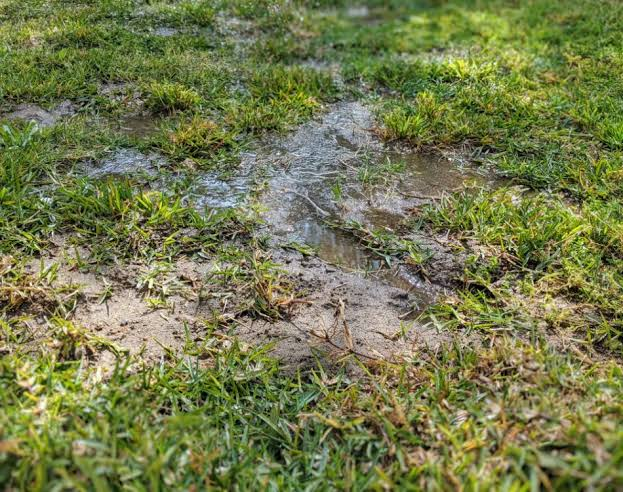
If puddles remain in your yard long after the rain has stopped, the ground may not have enough slope to move water away. Persistent standing water can damage grass, attract insects, create muddy areas, and make parts of the property difficult to use.
2. Water Pooling Near the Foundation
Water collecting close to your home’s foundation is an important warning sign. While grading alone may not solve every foundation-related water issue, improving the surrounding slope can help direct surface runoff away from the structure.
3. Erosion and Exposed Soil
Fast-moving water can wash away topsoil, expose roots, create channels, and damage planted areas. Erosion is especially common on sloped properties where runoff is not properly controlled.
4. Muddy or Unusable Lawn Areas
A lawn that remains soft, muddy, or saturated may have poor drainage or compacted soil. These conditions can make mowing difficult and prevent grass, shrubs, and other plants from growing successfully.
5. Cracks, Settlement, or Water Around Hardscapes
Water that collects beneath or beside patios, walkways, retaining walls, and driveways can contribute to settlement and surface damage. Drainage should be considered before installing or repairing these features.
6. Water Flowing Toward Walkways or Outdoor Living Areas
Runoff that crosses a sidewalk, patio, or driveway can create slippery surfaces, wash away soil, and reduce the usability of the outdoor space. Proper grading can help guide water toward a safer drainage path.
How Poor Drainage Can Damage Your Property
Poor drainage affects more than the appearance of your yard. Over time, unmanaged water can impact landscaping, outdoor structures, soil stability, and the overall function of your property.
Landscape and Lawn Damage
Excess moisture can suffocate grass roots, damage plants that prefer well-drained soil, and create conditions where weeds, fungus, and pests become more common. Repeated water buildup may also wash away mulch, decorative stone, and nutrient-rich topsoil.
Soil Erosion
When water flows too quickly across exposed soil, it can remove valuable topsoil and reshape the ground. Erosion may create channels, expose plant roots, undermine landscape borders, and make future landscaping projects more difficult.
Damage Around Concrete Surfaces
Concrete driveways, patios, walkways, and slabs need a properly prepared base and effective water management. If water repeatedly collects beneath or beside these surfaces, it may contribute to settlement, cracking, shifting, or premature deterioration.
Before installing a new concrete feature, it is important to consider the existing grade, soil conditions, and direction of runoff. Our concrete services can be combined with appropriate site preparation to support a more durable result.
Problems Near Buildings
Surface water that consistently flows toward a building may increase moisture concerns around the foundation, crawl space, basement, or exterior walls. Grading is not a substitute for structural or waterproofing work, but it can be an important part of managing surface runoff around a property.
Reduced Outdoor Usability
A yard with standing water, muddy paths, or eroded slopes is harder to enjoy and maintain. Poor drainage can limit where children play, where guests gather, or where outdoor furniture and landscaping features can be placed.
How Professional Grading Improves Yard Drainage
Professional grading involves shaping and leveling land to create a more functional and controlled surface. The goal is not always to make the entire property flat. In many cases, the right solution is to create or restore the appropriate slope so water can move away from problem areas.
A grading project may involve several steps.
Property and Drainage Assessment
The process begins with reviewing the property’s existing elevations, slope, soil conditions, water flow, and problem areas. A professional may examine where water collects, where erosion is occurring, and how nearby structures or hard surfaces affect runoff.
Identifying Low Areas and Water Flow Patterns
Low spots often hold water because they do not have a natural outlet. Identifying these areas helps determine whether the property needs soil redistribution, regrading, drainage features, or a combination of solutions.
Reshaping the Ground
Depending on the property, grading may involve adding, removing, or redistributing soil to create a more effective slope. The work should be planned carefully so that water is directed away from structures and does not create new problems for neighboring areas.
Preparing and Compacting the Soil
Proper soil preparation and compaction help create a stable surface for future landscaping, lawns, driveways, patios, and other improvements. The correct preparation depends on the intended use of the area and the property’s soil conditions.
Coordinating With Drainage Improvements
Some properties need more than a change in slope. Grading may be coordinated with swales, drainage channels, downspout management, erosion control, or other appropriate drainage measures.
Our professional grading services include land grading, yard leveling, site preparation, drainage solutions, erosion control, excavation, and slope correction for residential and commercial properties.
When Should You Consider Professional Yard Grading?
Professional grading may be worth considering if you notice recurring drainage concerns or plan to make major improvements to your property.
You may benefit from a grading assessment if:
- Your yard repeatedly floods after moderate rainfall
- Water flows toward your home or another structure
- You are installing a new lawn or landscape design
- You are planning a driveway, patio, walkway, or concrete slab
- Your property has visible erosion or unstable slopes
- You are preparing land for a construction or outdoor improvement project
- Your yard contains low spots that cannot be corrected through routine lawn care
- Previous landscaping or construction changed the natural flow of water
Addressing drainage before starting a major outdoor project can reduce the risk of installing new features on unstable, saturated, or poorly prepared ground.
How Grading Works With Landscaping and Hardscaping
Grading is often the first step in a larger property improvement project. Landscaping, hardscaping, and concrete work all depend on a suitable base and effective water management.
Landscaping Projects
A properly graded yard can provide a better foundation for sod, planting beds, trees, shrubs, mulch, and decorative stone. It can also help reduce areas where water collects and make lawn maintenance more manageable.
If you are planning a complete outdoor update, explore our landscaping services for landscape installation, lawn renovation, planting, mulch and stone installation, drainage solutions, and yard leveling.
Hardscaping Projects
Patios, walkways, retaining walls, paver areas, and outdoor living spaces need proper preparation and drainage. Grading helps establish the elevations and slopes needed for these features to function as intended.
Our hardscaping services include patios, retaining walls, walkways, paver installation, fire pits, decorative stone features, stairs, and other outdoor improvements.
Concrete Projects
Driveways, sidewalks, patios, slabs, and foundations require careful attention to site conditions. A properly prepared area can help support the long-term performance of a concrete installation and reduce drainage-related complications.
Whether you are improving an existing yard or preparing a property for new construction, grading and concrete work should be planned together when water flow is a concern.
Why Local Property Conditions Matter in Greensboro, NC
Properties in Greensboro and surrounding communities can have different soil conditions, slopes, drainage patterns, and development layouts. A solution that works well for one yard may not be appropriate for another.
Local property improvement work should account for:
- The existing slope and elevation of the land
- Soil composition and compaction
- Heavy rainfall and seasonal runoff
- Nearby driveways, roads, and structures
- Existing landscaping and drainage features
- The intended use of the improved area
- The relationship between grading and neighboring properties
A local contractor familiar with grading, landscaping, concrete, and hardscaping can help evaluate how these elements work together before recommending an approach.
Choose Greensboro Grading and Concrete for Property Improvement
At Greensboro Grading and Concrete, we help homeowners, businesses, and property managers improve outdoor spaces through practical, carefully planned property services.
Our team provides support for projects involving:
- Land grading and regrading
- Yard leveling and slope correction
- Site preparation and excavation
- Drainage solutions and erosion control
- Concrete driveways, patios, slabs, and walkways
- Landscaping and lawn improvements
- Hardscaping and outdoor living areas
We focus on dependable workmanship, proper preparation, and solutions designed around the needs of each property. Whether you are dealing with standing water or preparing for a new outdoor feature, the right starting point can make a significant difference.
Learn more about Greensboro Grading and Concrete or contact our team to discuss your property improvement needs and request a free consultation or estimate.
Frequently Asked Questions About Yard Drainage and Grading
Can grading fix standing water in my yard?
Grading can help correct standing water when the problem is caused by low areas, improper slopes, or poor surface runoff. However, some properties may also need additional drainage features, soil improvements, or other corrective work.
Is yard grading the same as yard leveling?
Not always. Yard leveling generally focuses on reducing uneven areas, while grading focuses on creating a useful slope or elevation pattern that supports drainage and the intended use of the property.
Can grading protect my home’s foundation?
Proper surface grading can help direct rainwater away from a home’s foundation. However, foundation problems may involve structural, waterproofing, plumbing, or subsurface drainage concerns that require evaluation by the appropriate professional.
Should grading be completed before landscaping?
In many cases, grading and drainage planning should happen before major landscaping installation. Preparing the ground first can help create a better base for lawns, planting beds, decorative stone, and other landscape features.
Does a concrete project require grading?
Many concrete projects require some level of site preparation, excavation, grading, and base preparation. The exact work depends on the type of concrete installation, soil conditions, drainage, and site layout.
Final Thoughts
Poor yard drainage can lead to standing water, erosion, damaged landscaping, hardscape problems, and moisture concerns around structures. Ignoring recurring water issues may make future property improvements more complicated and expensive.
Professional grading can improve the shape and slope of the land, helping water move more effectively and creating a stronger foundation for landscaping, concrete, and hardscaping projects.
If your Greensboro-area property has drainage concerns or needs preparation for an outdoor improvement, Greensboro Grading and Concrete can help you explore a practical solution.