Sloped properties can create unique challenges for homeowners. When soil moves downhill, rainwater causes erosion, or different areas of a yard have significant elevation changes, a retaining wall can provide both practical and visual benefits.
A retaining wall is more than a decorative landscape feature. When properly planned and installed, it can help manage soil, define different elevations, support certain landscape areas, and improve the overall structure of an outdoor space.
For homeowners in Greensboro, NC, recognizing signs of soil movement, erosion, or unstable slopes can help determine when a retaining wall may be worth considering.
In this guide, we’ll explain what retaining walls do, common signs that your property may benefit from one, and how retaining walls can work together with grading, landscaping, drainage, and hardscaping.
What Is a Retaining Wall?
A retaining wall is a structure designed to hold or retain soil between areas with different elevations.
Instead of allowing soil to naturally move downhill, a properly designed retaining wall can help create a more controlled transition between different levels of a property.
Retaining walls can be used for several purposes, including:
- Managing sloped yards
- Helping control soil movement
- Creating defined landscape areas
- Supporting elevated sections
- Reducing certain types of erosion
- Creating usable areas on sloped properties
- Improving the appearance of outdoor spaces
The appropriate wall design depends on the property’s slope, soil conditions, drainage, wall height, intended purpose, and surrounding landscape.
Does Your Greensboro Property Need a Retaining Wall?
Not every sloped property needs a retaining wall.
However, certain conditions may indicate that a property should be evaluated for a retaining wall or another type of landscape improvement.
1. Your Yard Has a Significant Slope
A steep or uneven yard can limit how much usable outdoor space you have.
Instead of having one continuous slope, a retaining wall can sometimes be used to create separate levels.
For example, a sloped backyard could potentially be divided into areas for:
- Lawn
- Planting beds
- Seating
- Walkways
- Patios
- Other outdoor features
This can make a difficult landscape easier to use and maintain.
2. Soil Is Moving or Washing Away
Soil erosion can gradually change the shape of a property.
After rainfall, you may notice soil collecting at the bottom of a slope, exposed roots, small channels forming in the ground, or sections of your yard becoming increasingly uneven.
A retaining wall can be one part of a larger erosion-control strategy, although the underlying cause of the erosion should always be considered.
Water management and grading may also be necessary.
Our grading services can help address uneven terrain and prepare a property for other outdoor improvements.
3. Your Landscape Has Different Elevations
Some properties naturally contain multiple elevation levels.
Instead of trying to eliminate every change in elevation, retaining walls can be incorporated into the landscape to create defined levels.
This can make the property more organized while also providing opportunities for additional landscaping.
A well-planned retaining wall can become part of the overall design rather than looking like an isolated structure.
4. You Want to Create More Usable Yard Space
A sloped yard can make it difficult to use outdoor areas for seating, entertaining, gardening, or other activities.
Terracing with retaining walls can sometimes create flatter sections that are easier to use.
For homeowners interested in creating outdoor living areas, retaining walls may work alongside patios, walkways, landscaping, and other hardscaping features.
How Retaining Walls Help With Sloped Properties
One of the main advantages of a retaining wall is its ability to create a controlled transition between different elevations.
Without a retaining structure, soil on a steep slope is naturally affected by gravity, rainfall, and other environmental factors.
A retaining wall can help organize the soil into a more structured landscape.
However, the wall itself is only one part of the project.
The surrounding grade, soil, drainage, and water flow should also be considered.
A wall installed without appropriate planning may experience unnecessary pressure from soil and water.
Why Drainage Matters Around Retaining Walls
Drainage is one of the most important considerations when planning a retaining wall.
Water that becomes trapped behind a wall can increase pressure on the structure.
For this reason, retaining-wall projects should account for how rainwater and groundwater move through the property.
Before installing a wall, it is useful to consider:
- Where rainwater currently flows
- Whether the area has standing water
- The slope of the property
- Soil conditions
- Existing drainage features
- Where water should go after rainfall
In some situations, grading and drainage improvements may need to be completed alongside the retaining wall.
This is why a complete evaluation of the property is often more useful than treating the wall as an isolated project.
Retaining Walls and Yard Grading
Retaining walls and grading often work together.
Grading controls the shape and elevation of the soil, while the retaining wall provides structural separation between different levels.
For example, a property may have a steep section that needs to be reshaped before creating a usable outdoor area.
The grading plan and retaining wall design should work together so that water and soil are managed appropriately.
If your property has significant slopes or uneven terrain, our grading services can be considered as part of a larger property improvement project.
Retaining Walls as Part of a Hardscaping Project
Retaining walls are commonly incorporated into broader hardscaping projects.
Instead of installing a wall by itself, homeowners may combine it with other outdoor features to create a more complete landscape design.
A project may include:
- Retaining walls
- Walkways
- Patios
- Landscape borders
- Outdoor living areas
- Steps
- Other hardscape features
This can help connect different areas of a property and make the landscape more functional.
You can explore our hardscaping services if you’re planning a larger outdoor improvement project.
Retaining Walls and Landscaping
A retaining wall can also create opportunities for additional landscaping.
Once different areas of the property have been defined, those areas can potentially be used for planting beds, shrubs, flowers, ground cover, or other landscape features.
Plants can soften the appearance of a retaining wall and help integrate it into the surrounding property.
The landscape design should still take drainage, sunlight, soil conditions, and plant selection into account.
For a broader outdoor improvement project, our landscaping services can be combined with hardscaping and grading work.
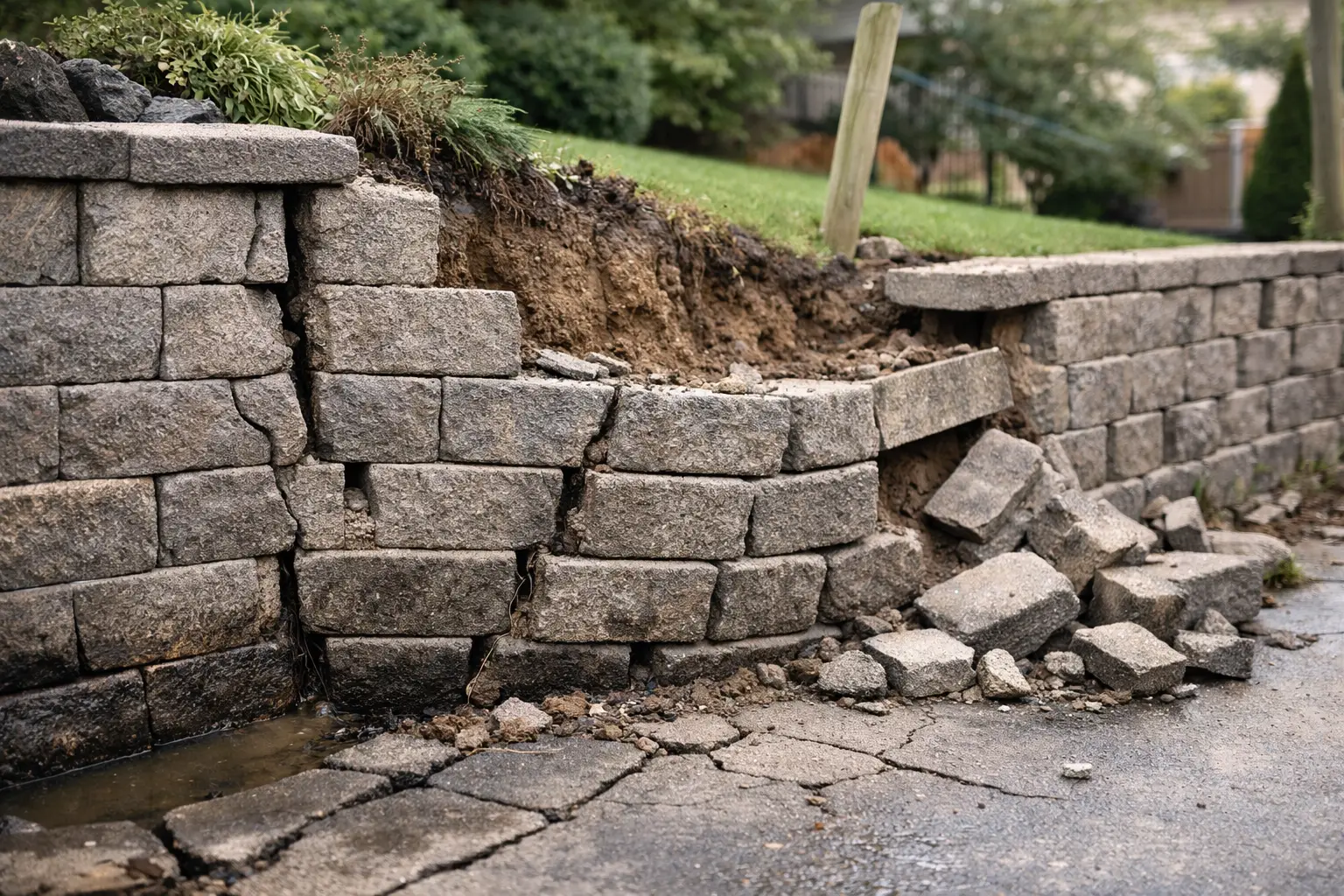
Common Signs of Retaining Wall Problems
If you already have a retaining wall, it is important to pay attention to its condition.
Some signs may indicate that the wall needs professional evaluation.
Wall Leaning
A wall that is noticeably leaning can indicate movement or pressure behind the structure.
Cracks
Cracks can develop for different reasons. Small surface cracks are not necessarily an indication of a serious structural problem, but larger or changing cracks should be evaluated.
Bulging Sections
A section of wall that appears to be pushing outward may indicate pressure behind the wall.
Soil Movement
Changes in the soil above or below a retaining wall may indicate erosion or drainage concerns.
Water Problems
Persistent water around or behind the wall may indicate that drainage needs attention.
Separation Between Sections
If sections of a retaining wall appear to be separating or shifting, the condition should be evaluated rather than ignored.
The appropriate solution depends on the wall’s construction, age, materials, drainage, soil, and overall condition.
Can a Retaining Wall Prevent Soil Erosion?
A retaining wall can help control soil movement in certain situations, but it should not be viewed as a universal solution for erosion.
Erosion can have many causes, including:
- Heavy water flow
- Poor grading
- Steep slopes
- Exposed soil
- Inadequate vegetation
- Drainage problems
If water is causing the erosion, the water-flow problem should also be addressed.
Simply placing a wall in the path of moving water without considering drainage may not solve the underlying issue.
Choosing the Right Retaining Wall Design
There is no single retaining wall design that works for every property.
The appropriate solution depends on the project’s requirements and the property’s conditions.
Important factors can include:
Wall Height
The height of the wall affects its design and construction requirements.
Soil Conditions
Different soils behave differently under pressure and when exposed to moisture.
Drainage
Water management is critical to the long-term performance of many retaining wall projects.
Property Slope
The existing terrain influences how the wall interacts with the surrounding landscape.
Intended Use
A wall designed primarily for landscape separation may have different requirements from a wall supporting a significant change in elevation.
Appearance
Materials and finishes should complement the existing home and landscape.
Retaining Walls for Small and Large Yards
Retaining walls are not limited to large properties.
Smaller yards can also benefit from carefully planned landscape walls.
A small wall can help define a garden bed, separate levels, create a border, or improve the visual organization of a landscape.
Larger properties may require multiple walls or a more extensive grading and drainage plan.
The size of the property does not determine whether a retaining wall is appropriate. The terrain and intended use are more important factors.
What Should You Do Before Installing a Retaining Wall?
Before starting a retaining wall project, evaluate the entire area rather than focusing only on the location of the wall.
Consider:
- Where the soil currently moves
- How water travels across the property
- Whether the slope needs grading
- What the wall will support
- How the wall will connect with existing landscaping
- Whether a patio or walkway will be added
- How the finished area will be maintained
This approach can help create a more functional outdoor space.
How Retaining Walls Can Improve Curb Appeal
A retaining wall can serve a practical purpose while also improving the appearance of a property.
Well-designed walls can create clean boundaries between lawn areas, gardens, walkways, and different elevations.
They can also give a sloped property a more structured appearance.
When the materials and layout complement the home’s exterior and existing landscape, the wall can become an attractive part of the overall property design.
Frequently Asked Questions About Retaining Walls in Greensboro, NC
What is the main purpose of a retaining wall?
A retaining wall is primarily used to hold soil between areas with different elevations. It can also help define landscape areas and create more usable space on sloped properties.
Does every sloped yard need a retaining wall?
No. Some slopes can be managed through grading, landscaping, drainage improvements, or other methods. A property should be evaluated to determine the most appropriate solution.
Can retaining walls help with erosion?
They can help manage soil movement in certain situations, but erosion may also be caused by water flow, poor grading, or other conditions. The underlying cause should be considered.
Why is drainage important for retaining walls?
Water can create pressure behind a retaining wall. Proper drainage planning can help manage water and reduce unnecessary pressure on the structure.
Can a retaining wall create more usable yard space?
In some situations, retaining walls can be used to create terraces or flatter sections on sloped properties, making portions of the yard easier to use.
Can retaining walls be combined with landscaping?
Yes. Retaining walls can be incorporated into landscaping projects with planting beds, lawns, walkways, patios, and other outdoor features.
How do I know if my existing retaining wall has a problem?
Leaning, bulging, significant cracks, movement, soil erosion, or persistent drainage issues may indicate that an existing retaining wall should be professionally evaluated.
Improve Your Greensboro, NC Property With a Well-Planned Outdoor Project
A retaining wall can be a useful solution for properties with slopes, soil movement, erosion concerns, or multiple elevation levels.
However, successful results require more than simply building a wall.
Grading, drainage, soil conditions, landscaping, hardscaping, and the intended use of the space should all be considered as part of the project.
If you’re dealing with a sloped or uneven property in Greensboro, NC, Greensboro Grading & Concrete can help you determine what type of property improvement may be appropriate.
Explore our hardscaping services or grading services to learn more about improving the function and appearance of your outdoor space.