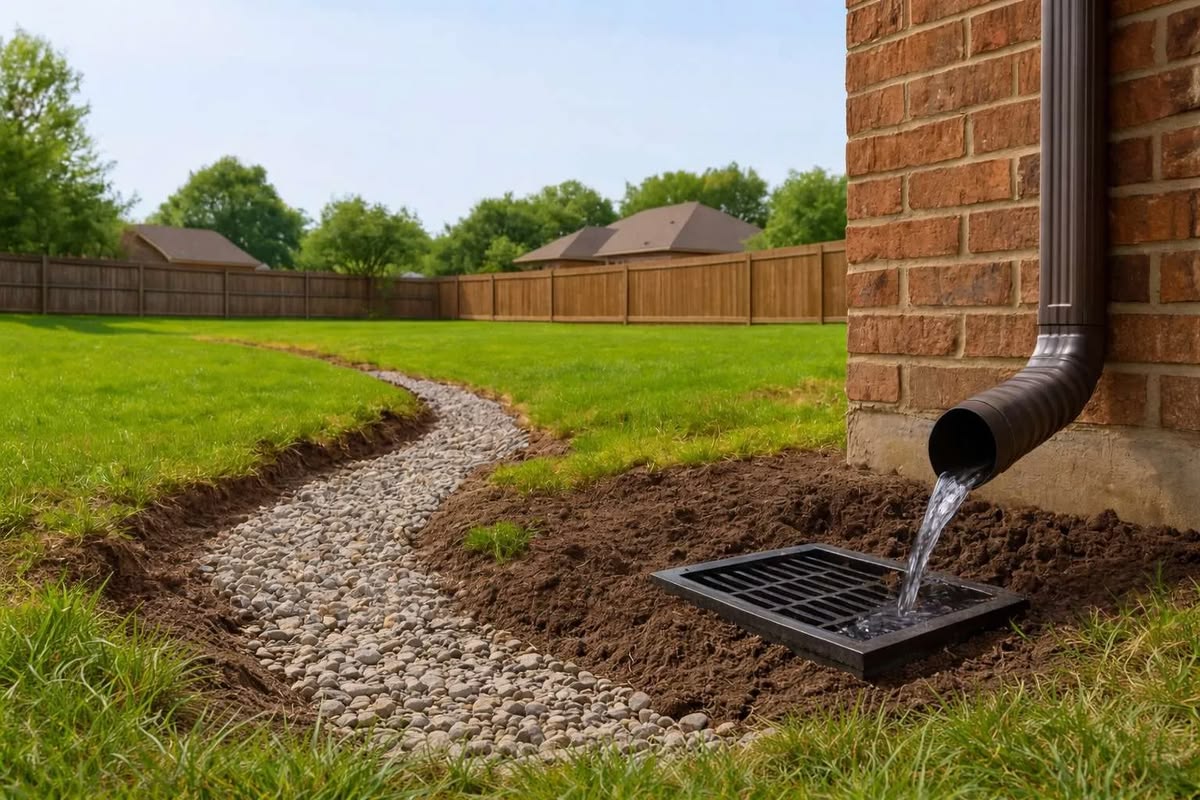
Water drainage is an important part of maintaining a healthy and functional property. When rainwater does not move away from the right areas, it can collect around your home, damage landscaping, create muddy areas, and contribute to soil erosion.
One of the most effective ways to improve the way water moves across a property is through proper yard grading.
For homeowners in Greensboro, NC, understanding how grading affects drainage can help prevent many common problems before they become expensive repairs.
In this guide, we’ll explain what yard grading is, how it affects drainage, signs that your property may have a grading problem, and when professional grading services may be needed.
What Is Yard Grading?
Yard grading is the process of shaping or adjusting the elevation of soil to create the appropriate slope across a property.
The purpose is not simply to make the yard look level. Proper grading helps direct water toward suitable drainage areas while keeping water away from structures and other areas where it could cause problems.
Depending on the property, grading may involve:
- Removing excess soil
- Adding soil to low areas
- Reshaping slopes
- Leveling uneven sections
- Improving water flow
- Preparing land for construction
- Correcting drainage-related grading problems
Every property is different, so the appropriate grading solution depends on the existing terrain, soil conditions, structures, landscaping, and drainage patterns.
Why Does Yard Grading Matter for Drainage?
Rainwater naturally follows the path of least resistance.
If your yard has an appropriate slope, water can move away from buildings and toward a suitable drainage area.
However, low spots, uneven ground, or incorrect slopes can cause water to collect where it shouldn’t.
Poor grading may contribute to:
- Standing water
- Muddy areas
- Soil erosion
- Water collecting near foundations
- Damaged landscaping
- Saturated soil
- Drainage problems around driveways and patios
- Difficulty maintaining a usable lawn
Correcting the underlying slope can sometimes be an important part of addressing these problems.
Signs Your Greensboro Yard May Have a Grading Problem
You may not immediately notice that grading is causing your property’s drainage problems.
There are several signs worth watching for after rainfall.
1. Water Pools in the Yard
If water regularly remains in the same area after rain, the property may have a low spot or an area where water cannot drain properly.
A small amount of temporary moisture is normal after heavy rainfall. However, water that repeatedly remains in the same location may indicate an underlying drainage or grading issue.
2. Water Collects Near Your Home
Water accumulating close to the foundation deserves attention.
The ground around a structure should generally encourage water to move away rather than toward the building.
If the soil slopes toward your home, grading may be part of the solution.
3. Your Yard Becomes Extremely Muddy
Excess moisture can make parts of a yard difficult to use.
Constantly muddy areas may result from poor drainage, compacted soil, low elevations, or a combination of factors.
Correcting the grade can improve how water moves across the property.
4. You Notice Soil Erosion
Fast-moving water can gradually carry soil away.
Over time, erosion can create channels, exposed roots, uneven areas, and other landscape problems.
Proper grading can help control the direction and movement of surface water.
5. Water Flows Toward Your Driveway or Patio
Outdoor surfaces can also be affected by poor drainage.
If rainwater repeatedly flows toward a driveway, patio, walkway, or other hard surface, the surrounding grade may need to be evaluated.
A well-planned property should account for drainage when installing new outdoor surfaces.
How Grading and Landscaping Work Together
Grading is often an important part of a larger landscaping project.
Before installing plants, lawns, garden beds, or other landscape features, the underlying terrain should be considered.
A beautiful landscape can still experience problems if water continuously collects in the wrong areas.
Proper grading can help create a better foundation for additional landscaping work.
If you’re planning a complete outdoor improvement, you can also explore our landscaping services for additional ways to improve the appearance and functionality of your property.
Grading Before Installing a Concrete Driveway or Patio
Grading can also be important before concrete installation.
A driveway or patio needs a properly prepared surface beneath it. If the surrounding ground has significant elevation or drainage problems, those issues may need to be addressed before concrete is installed.
For example, a new patio should not simply become another place where rainwater collects.
Planning the surrounding grade and drainage before construction can help the new concrete surface work properly with the rest of the property.
You can learn more about our concrete services if you’re planning a driveway, patio, walkway, slab, or other concrete project.
Can Grading Fix Standing Water?
In some situations, correcting the grade can significantly improve standing-water problems.
However, grading is not automatically the answer to every drainage issue.
The cause of the water problem should be identified first.
Standing water can sometimes be related to:
- Low areas in the property
- Poor soil drainage
- Improper slopes
- Downspout discharge
- Compacted soil
- Water flowing from another part of the property
- Drainage system limitations
A professional evaluation can help determine whether grading, drainage improvements, or another solution is appropriate.
What Happens During a Yard Grading Project?
A grading project generally begins with an evaluation of the existing property.
The goal is to understand the current elevations, slopes, problem areas, and direction of water flow.
Depending on the project, the work may involve several stages.
Site Evaluation
The property is assessed to identify uneven areas, low spots, slopes, drainage concerns, and other conditions that may affect the project.
Planning the New Grade
The desired grade is determined based on the property’s layout and drainage requirements.
The location of buildings, driveways, patios, landscaping, and other structures should be considered.
Soil Removal or Addition
Some areas may require soil to be removed, while other low sections may need additional material.
Reshaping the Property
The soil is shaped to create the intended slopes and elevations.
Final Preparation
The finished grade is checked and prepared for its intended use, whether that involves lawn installation, landscaping, concrete construction, or another project.
The exact process varies depending on the size and condition of the property.
Yard Grading for New Construction and Property Improvements
Grading isn’t only useful for fixing existing drainage problems.
It can also be an important part of preparing land for a new project.
Property owners may need grading before:
- Building additions
- Installing patios
- Constructing driveways
- Creating outdoor living spaces
- Installing landscaping
- Preparing construction areas
- Improving drainage
- Developing uneven sections of a yard
Starting with properly prepared ground can make subsequent construction and landscaping work easier to plan.
How Greensboro Weather Can Affect Yard Drainage
Properties in Greensboro experience periods of rainfall throughout the year, making water management an important consideration for homeowners.
Heavy rainfall can quickly expose problems that may not be obvious during dry weather.
A yard that appears perfectly functional on a dry day may develop standing water, erosion, or muddy sections following a significant rain event.
Paying attention to how water moves after rainfall can provide useful information about potential grading problems.
If you repeatedly notice the same drainage issue after rain, it may be worth having the property evaluated.
Grading vs. Drainage: What’s the Difference?
Grading and drainage are closely related, but they are not exactly the same.
Grading changes the shape and elevation of the ground to influence the direction of surface water.
Drainage systems use specific structures or pathways to collect and move water.
Depending on the property, one solution may be sufficient, while another property may benefit from a combination of grading and drainage improvements.
For example, improving the slope of a yard may help water move toward an appropriate drainage area. In another situation, a drainage system may be necessary to manage water that cannot be redirected through grading alone.
The right solution depends on the cause of the problem.
Can Poor Grading Affect Hardscaping?
Yes. Poor grading can create challenges for hardscaping projects.
Features such as patios, retaining walls, walkways, and other outdoor structures need to work with the property’s existing terrain.
If water is not properly managed, it can contribute to erosion or soil movement around hardscaping features.
That is why grading and hardscaping should be considered together when planning major outdoor improvements.
Our hardscaping services can be part of a larger property improvement plan when you want to improve both the function and appearance of your outdoor space.
When Should You Consider Professional Grading Services?
You may want to consider professional grading if:
- Your yard has persistent standing water
- Water flows toward your home
- The property has major uneven areas
- Soil is repeatedly eroding
- You are preparing for a concrete installation
- You are planning major landscaping
- You are developing an outdoor living area
- Your property requires significant elevation changes
Small landscape adjustments may sometimes be handled as part of routine yard maintenance, but larger grading projects require careful planning.
Incorrectly moving soil can sometimes create new drainage problems instead of solving the original issue.
Benefits of Proper Yard Grading
Professional grading can provide several benefits when it is appropriate for the property.
Better Water Flow
Correct slopes can help direct surface water toward suitable areas.
Reduced Standing Water
Addressing low spots may help reduce areas where rainwater repeatedly collects.
Protection Around Structures
Proper grading can help move surface water away from buildings.
Better Landscape Preparation
A properly shaped yard can provide a better starting point for landscaping projects.
Improved Outdoor Usability
Reducing muddy or constantly wet areas can make more of your yard practical to use.
Better Preparation for Construction
Grading can prepare the property for concrete, hardscaping, landscaping, and other improvements.
Frequently Asked Questions About Yard Grading in Greensboro, NC
What is the purpose of grading a yard?
The main purpose of yard grading is to shape the ground so surface water moves in an appropriate direction. Proper grading can help address low spots, uneven terrain, and certain drainage problems.
How do I know if my yard needs grading?
Repeated standing water, muddy areas, soil erosion, and water flowing toward your home can all be signs that the property’s grade should be evaluated.
Can grading stop water from collecting near my house?
If the problem is caused by an unsuitable slope, correcting the grade may help direct surface water away from the house. However, the cause of the drainage issue should be evaluated before deciding on a solution.
Should I grade my yard before landscaping?
In many projects, grading is completed before major landscaping because the shape of the ground affects drainage, planting areas, lawns, and other landscape features.
Is grading necessary before a concrete project?
It may be necessary if the existing ground is uneven or has drainage problems. Proper site preparation can provide a more suitable base for a driveway, patio, walkway, or other concrete surface.
Can grading fix every drainage problem?
No. Some drainage problems require additional solutions. The correct approach depends on the property’s terrain, soil, water flow, and the source of the problem.
Improve Your Greensboro Property With Proper Grading
Good drainage starts with understanding how water moves across your property.
If your yard has low areas, standing water, erosion, or slopes that direct water toward structures, grading may be an important part of the solution.
Proper grading can also provide a better foundation for landscaping, concrete, hardscaping, and other property improvements.
If you’re dealing with drainage or uneven terrain in Greensboro, NC, Greensboro Grading & Concrete can evaluate your project and help determine what type of grading or property improvement may be appropriate.
Explore our grading services to learn more about how proper site preparation can improve your property.